Awareness, Prevention and Early Diagnosis Save Lives
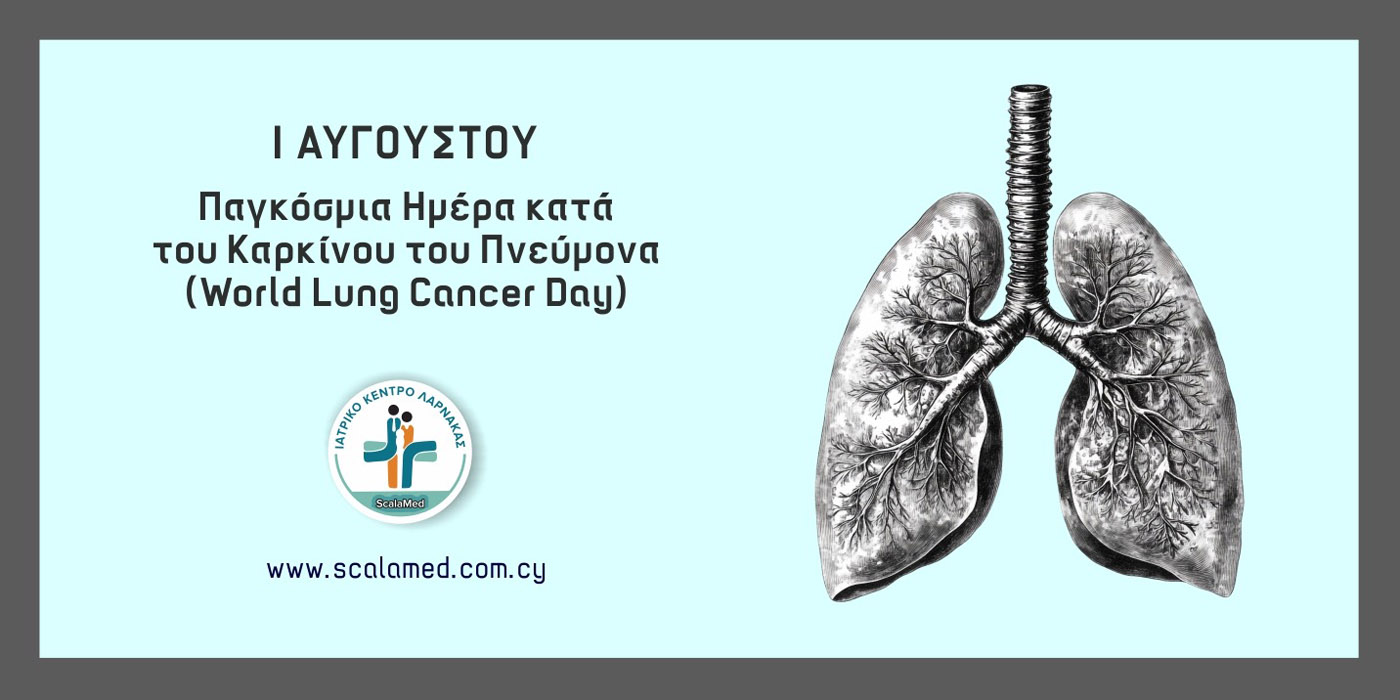
The 1st of August is dedicated to World Lung Cancer Day, a day of information and awareness aimed at highlighting the importance of prevention, early diagnosis and access to modern treatments.
Lung cancer remains one of the most common forms of cancer worldwide and the leading cause of cancer death. Nevertheless, the scientific progress of recent years, with the development of new diagnostic methods, immunotherapy and targeted therapies, has significantly improved the outlook for many patients.
Risk factors
The most significant risk factor is smoking, which is responsible for the majority of cases. However, lung cancer can also appear in people who have never smoked.
Other risk factors include:
* Passive smoking
* Exposure to radon
* Air pollution
* Occupational exposure to asbestos, arsenic, chromium and other carcinogenic substances
* Family history of the disease
Symptoms that should not be ignored
The early stages often cause no obvious symptoms. When symptoms do appear, they may include:
* A persistent cough or a change in a chronic cough
* Shortness of breath
* Chest pain
* Coughing up blood
* Hoarseness
* Unexplained weight loss
* Persistent fatigue
* Frequent respiratory infections
Timely evaluation by a doctor is of decisive importance.
The importance of prevention
Prevention is the most effective weapon against the disease:
* Quitting smoking at any age.
* Avoiding passive smoking.
* Protection from occupational and environmental hazards.
* Adopting a healthy lifestyle with a balanced diet and regular exercise.
* Preventive screening with low-dose computed tomography in high-risk individuals, in accordance with the guidance of the treating physician.
The message of the day
World Lung Cancer Day reminds us that information, prevention and early diagnosis can save lives. At the same time, it highlights the need for equal access for all patients to quality health services, innovative treatments and comprehensive psychosocial support.
Every step towards quitting smoking, every preventive screening and every early diagnosis can make the difference.
Sources
* World Health Organization (WHO)
* International Agency for Research on Cancer (IARC)
* International Association for the Study of Lung Cancer (IASLC)
* American Cancer Society (ACS)
* European Society for Medical Oncology (ESMO)