World IVF Day: The science that gave hope to millions of families
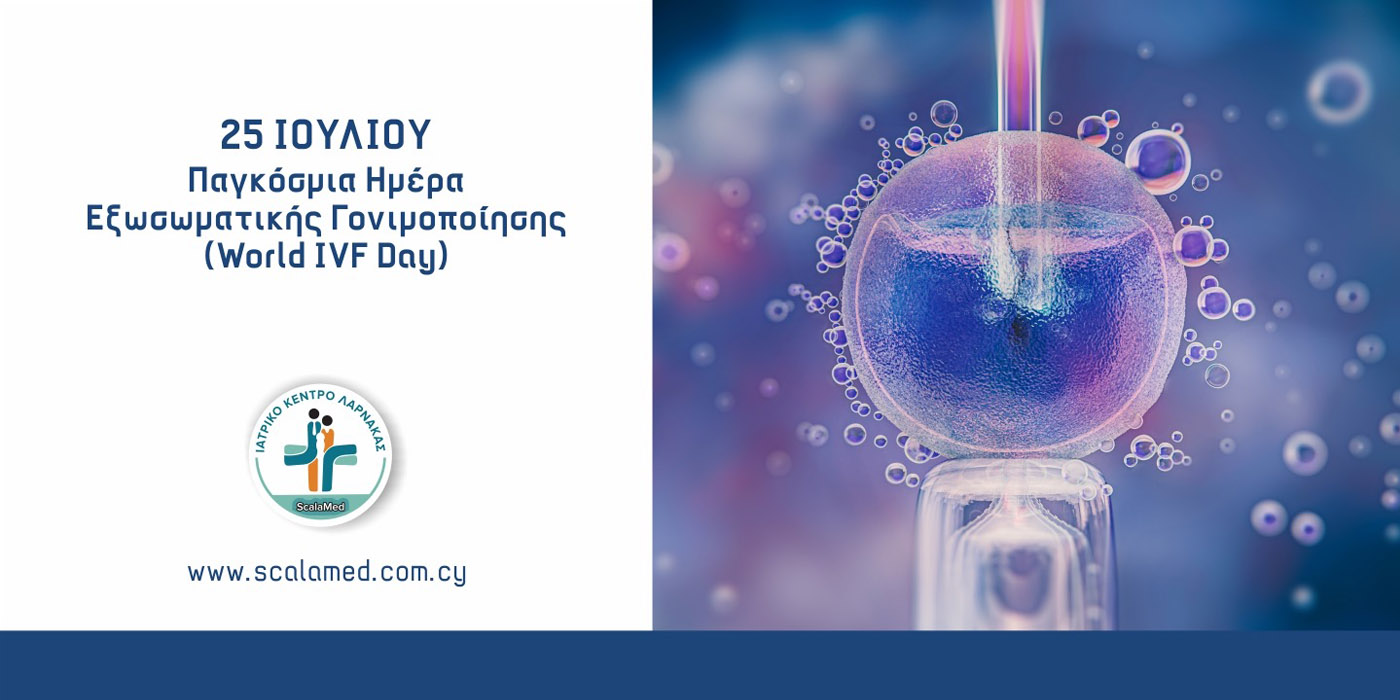
Every year, on 25 July, World IVF Day is observed, a day dedicated to one of the most significant achievements of modern medicine. This date was chosen because on 25 July 1978 Louise Brown was born in the United Kingdom, the first child in the world born following successful in vitro fertilization (IVF), opening a new path in the treatment of infertility.
Today, more than four decades later, in vitro fertilization has helped over 12 million children to be born worldwide, offering hope to couples and individuals facing difficulties conceiving.
What is in vitro fertilization?
In vitro fertilization is an Assisted Reproduction method in which the egg is fertilized by the sperm in a specialized laboratory. The fertilized embryo develops for a few days and is then transferred into the uterus, with the aim of achieving pregnancy.
The procedure includes:
* Hormonal stimulation of the ovaries.
* Egg retrieval.
* Collection and processing of sperm.
* Fertilization in the laboratory.
* Culture of the embryos.
* Embryo transfer.
* Pregnancy test.
When is it recommended?
In vitro fertilization may be a treatment option in cases such as:
* Female infertility due to blocked or damaged fallopian tubes.
* Endometriosis.
* Diminished ovarian reserve or advanced reproductive age.
* Male factor infertility.
* Unexplained infertility.
* Carriers of genetic disorders, through preimplantation genetic testing (PGT), where indicated.
The advances that changed the landscape
Assisted Reproduction technology is constantly evolving, increasing success rates and improving the safety of treatments.
Significant advances include:
* Intracytoplasmic sperm injection (ICSI).
* Cryopreservation of eggs and embryos.
* Preimplantation genetic testing (PGT).
* Embryo culture to the blastocyst stage.
* Modern embryo development monitoring systems (Time-Lapse Embryo Monitoring).
The psychological dimension of infertility
Infertility is not only a medical challenge but also a significant psychological ordeal. The stress, disappointment and emotional burden that often accompany treatments underline the importance of psychological support, proper information and individualized care by a multidisciplinary team.
A message of hope
World IVF Day is a reminder that science continues to evolve, giving more options to those who dream of having a child.
Despite the difficulties that may accompany the fertility journey, early diagnosis, individualized treatment and support from specialized health professionals can significantly increase the chances of success.
⸻
Sources
1. European Society of Human Reproduction and Embryology (ESHRE). Facts and Figures on Assisted Reproduction.
2. World Health Organization (WHO). Infertility. https://www.who.int/news-room/fact-sheets/detail/infertility
3. Centers for Disease Control and Prevention (CDC). Assisted Reproductive Technology (ART). https://www.cdc.gov/art
4. American Society for Reproductive Medicine (ASRM). Patient Education – In Vitro Fertilization (IVF). https://www.reproductivefacts.org
5. Nobel Prize. The Nobel Prize in Physiology or Medicine 2010 – Robert G. Edwards. https://www.nobelprize.org