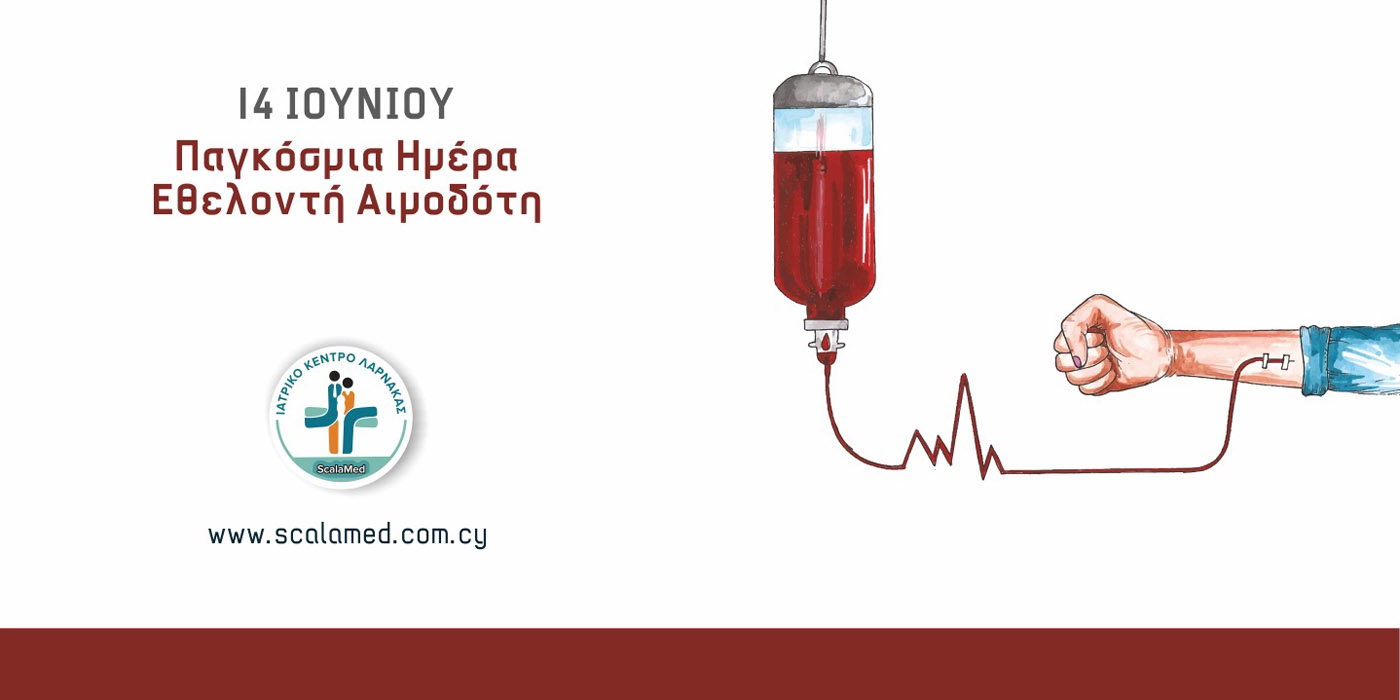
An act of giving that saves lives
Every year on June 14, World Blood Donor Day serves as a reminder of the immeasurable value of voluntary blood donation and the power one person has to save another’s life.
Blood cannot be produced artificially. The only source is the human body, and voluntary blood donation is a cornerstone of every modern healthcare system. Thousands of patients need blood transfusions every day — people undergoing surgery, cancer patients, individuals with chronic blood disorders, road accident victims, and women experiencing complications during childbirth.
Why is regular blood donation important?
* It ensures an adequate blood supply for emergency and scheduled needs.
* It contributes to improving the quality of life of thousands of patients.
* It strengthens solidarity and social cohesion.
* It provides security to health services through a stable base of volunteer donors.
Who can become a blood donor?
In general, any healthy adult who meets the criteria set by the relevant blood donation services can become a donor. Before each donation, a brief medical check and assessment is carried out to ensure the process is safe for both the donor and the recipient.
Myths and facts
Myth: Blood donation is painful and exhausting for the body.
Fact: The procedure takes approximately 10 minutes, is safe, and the body quickly replenishes the volume of blood donated.
Myth: A single blood donation doesn’t make a difference.
Fact: One unit of blood can contribute to the treatment of up to three patients, as it is separated into its individual components.
A gift that costs nothing but means everything
Voluntary blood donation is an act of selfless giving, social responsibility, and humanity. With just a few minutes of our time, we can offer hope, strength, and a second chance at life.
On June 14, let us all become part of a chain of life. Because every drop of blood can make a difference.